Great news article regarding a protected marine area in Chile that has just been approved.
Blue whale conservation gets a boost
Friday, March 14, 2014

Thursday, March 13, 2014
You Are What You Eat
Interesting study about food quality in different countries.
This is a leap towards awareness with regards to famine and obesity - two sides of the same coin.
http://www.oxfam.org.uk/what-
This is a leap towards awareness with regards to famine and obesity - two sides of the same coin.
http://www.oxfam.org.uk/what-
Monday, March 10, 2014
David and Goliath
This is a really inspiring project from the WWF.
I believe this project has real promise. We need to get the companies with us instead of fighting against them, especially the big multinationals. I'm not saying it's easy, but neither is fighting against such a powerful corporation.
David against Goliath is an inspiring story, but what would the result be if they work together?
I believe this project has real promise. We need to get the companies with us instead of fighting against them, especially the big multinationals. I'm not saying it's easy, but neither is fighting against such a powerful corporation.
David against Goliath is an inspiring story, but what would the result be if they work together?
Friday, February 7, 2014
Places to See Before You Die: Mineral Deposits in Pamukkale, Turkey
When you arrive in the little town, you don't understand what the fuss is all about. There are plenty of touristic services in a small village that is seemingly unimportant. Until you venture out to the viewpoint and you feel like you have landed on the moon.
The city contains hot springs and travertine terraces of carbonate minerals left by the flowing water.
The etherial landscape cannot be described in words. The name "Pamukkale" means cotton castle in Turkish, which clearly comes from the cotton-ball-like shape of the deposits created by the local hot springs in interaction with its surrounding nature, climate and geology. It is a UNESCO world heritage site truly unique in its genre. The lunar landscape seems neverending and provides breathtaking views from all sides of the site.

The city contains hot springs and travertine terraces of carbonate minerals left by the flowing water.
The etherial landscape cannot be described in words. The name "Pamukkale" means cotton castle in Turkish, which clearly comes from the cotton-ball-like shape of the deposits created by the local hot springs in interaction with its surrounding nature, climate and geology. It is a UNESCO world heritage site truly unique in its genre. The lunar landscape seems neverending and provides breathtaking views from all sides of the site.
Friday, January 17, 2014
Places to See Before You Die: Ephesus, Turkey
Ephesus in Turkey is one of the most impressive remains of the ancient Greek empire.
You can walk around in what is basically a small village of ancient Greek ruins, but the library is clearly the highlight of this site.
The library wall is almost complete and many details are still clearly visible.
It is an impressive site, standing tall and proud.
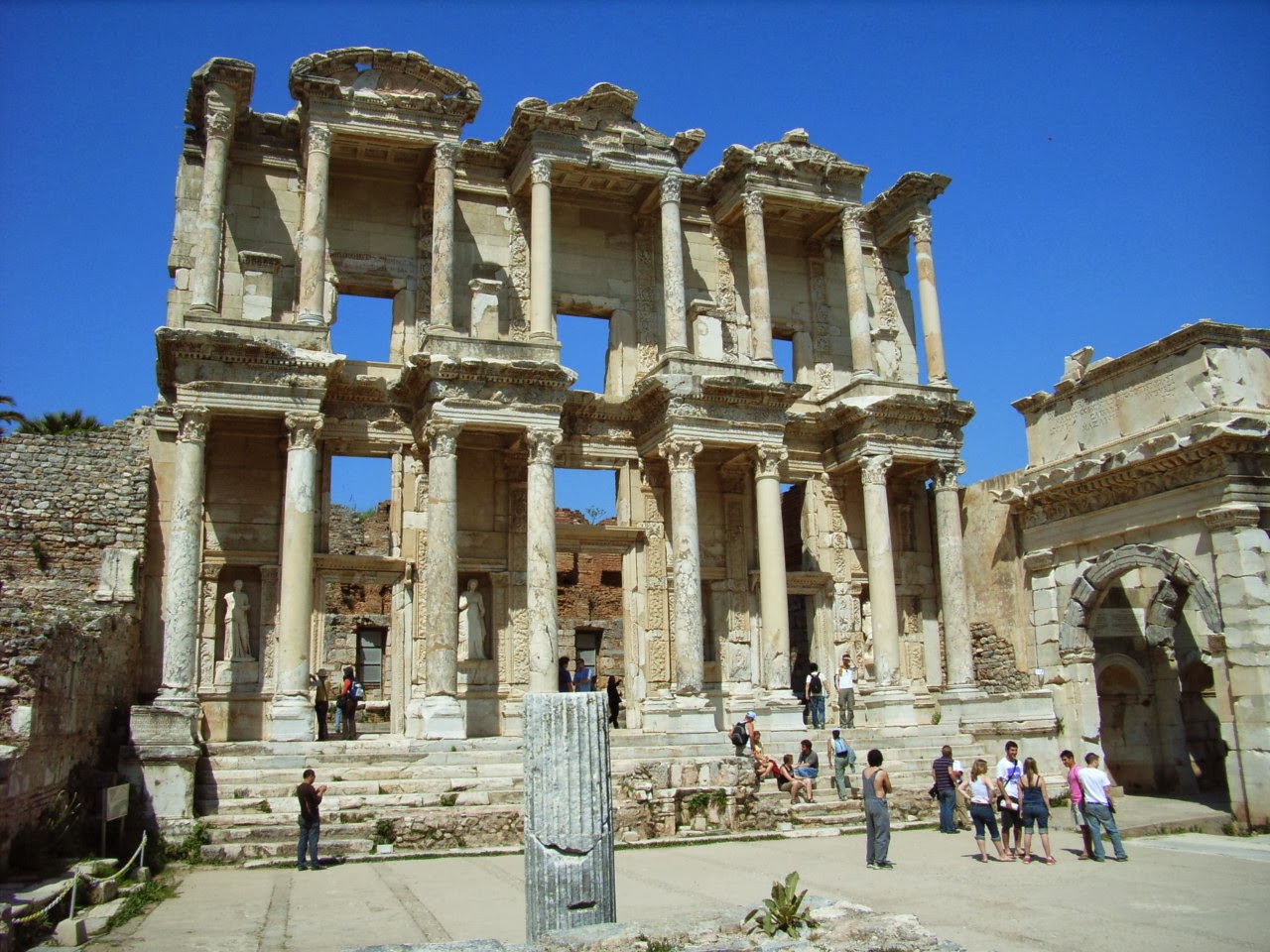
You can walk around in what is basically a small village of ancient Greek ruins, but the library is clearly the highlight of this site.
The library wall is almost complete and many details are still clearly visible.
It is an impressive site, standing tall and proud.
As you walk around, you can learn about the various aspects of ancient Greek life and society. However, be prepared for the heat. As impressive as the experience was, I could not stay there very long. Many tourists chose to buy hats to protect against the heat as you are in a very exposed place, without trees around to provide shade. With the sandstone colors, the light is reflected and the heat is multiplied.
I believe this is one of the best preserved ancient Greek ruins that remain in the world and it is a must-see.
Monday, January 6, 2014
Places to See Before You Die: Maori Culture in Rotorua, New Zealand
It was raining cats and dogs when we visited, but it was still such a wonderful experience. I would advise doing the tour on a dry day if you can as we spent quite a lot of time meandering the village, which was clearly less enjoyable as it was really pouring down.
In Rotorua you can visit a Maori village built on hot springs. They will guide you through the village and
explain the many amazing ways the Maori cohabited and respected nature. It is a unique cultural experience.
 The tour shows you the small Maori village with its distinctive architecture that actually seems to have eyes. They decorate their outside walls with shells that glimmer in the dark, looking like millions of eyes looking at you. I was told this works as a type of defence mechanism to intimidate intruders and unwanted visitors. They also show your their typical dance, serving a similar purpose.
In the tour they show you the area, which is impressive in and of itself, but the most fascinating part is how they use the natural thermic activity in their daily lives. The use their local hot springs not only for bath and leisure, but even daily chores such as cooking. It is inspiring to see how they interact with their surroundings, it is a natural and a cultural experience all at once, and I think we could learn a lot from them.
In Rotorua you can visit a Maori village built on hot springs. They will guide you through the village and
explain the many amazing ways the Maori cohabited and respected nature. It is a unique cultural experience.
The tour shows you the small Maori village with its distinctive architecture that actually seems to have eyes. They decorate their outside walls with shells that glimmer in the dark, looking like millions of eyes looking at you. I was told this works as a type of defence mechanism to intimidate intruders and unwanted visitors. They also show your their typical dance, serving a similar purpose.In the tour they show you the area, which is impressive in and of itself, but the most fascinating part is how they use the natural thermic activity in their daily lives. The use their local hot springs not only for bath and leisure, but even daily chores such as cooking. It is inspiring to see how they interact with their surroundings, it is a natural and a cultural experience all at once, and I think we could learn a lot from them.
Sunday, January 5, 2014
Sustainable Living: Computer Customs
Believe it or not, but sometimes it is better for the environment to get the newest gadget.
Particularly for computers there is a big difference between the good old desktops with the big screens and today's laptops.
Energy consumption by half by changing your old screen for a flat screen. If you switch to a laptop, you can decrease electricity consumption with 90%!
You might cause more waste, but 90% decrease in electricity consumption on a daily basis could be worth it.
Another matter to pay attention to is the power usage. You might want to look over your computer's power management settings, as a computer in sleep mode uses 10% less energy. It's all made very easy with the power management settings which can be set to a certain delay time, e.g. 10 minutes of inaction, after which it goes to sleep.
On your laptop you can set your computer to hybernate as you close the lid. This is my personal favorite as it is fast and efficient without risking that your computer goes to sleep when you don't want it to.
And finally don't forget to turn your computer off when you are not using it!
For laptops it can even be worth pulling out the charger if you don't need it. Obviously an empty battery is a nasty surprise, but modern laptops can charge rather quickly and thereafter be unplugged to save further electricity.
Particularly for computers there is a big difference between the good old desktops with the big screens and today's laptops.
Energy consumption by half by changing your old screen for a flat screen. If you switch to a laptop, you can decrease electricity consumption with 90%!
You might cause more waste, but 90% decrease in electricity consumption on a daily basis could be worth it.
Another matter to pay attention to is the power usage. You might want to look over your computer's power management settings, as a computer in sleep mode uses 10% less energy. It's all made very easy with the power management settings which can be set to a certain delay time, e.g. 10 minutes of inaction, after which it goes to sleep.
On your laptop you can set your computer to hybernate as you close the lid. This is my personal favorite as it is fast and efficient without risking that your computer goes to sleep when you don't want it to.
And finally don't forget to turn your computer off when you are not using it!
For laptops it can even be worth pulling out the charger if you don't need it. Obviously an empty battery is a nasty surprise, but modern laptops can charge rather quickly and thereafter be unplugged to save further electricity.
Saturday, January 4, 2014
Sustainable Living: Conscious Consumption
With increased awareness on sustainability issues, we are looking more closely at the things we buy. We are more and more aware of materials used in production that are harmful not only to our natural environments, but even to us humans. Bio or Eco labelling are becoming increasingly common across the globe in order to provide a more sustainable alternative.
There are various labels and brands now that certify specific ecological or social conditions. These are very important, not just as an indicator to us as the consumer, but also as an awareness campaign amongst consumers, producers and sellers worldwide. These brands are spreading and creating a very positive influence on the various parties in production as well as the consumers. However, that said, there are limits to these.
Firstly, there are many different brands, but most of these tend to focus on either ecological/biological issues OR social issues. While I am of the firm belief that they are interconnected and not separable, few combine the two categories. Therefore you must choose if you care about the future of our natural planet or of the people in it. This can be a difficult choice to make.
Another issue is that in order to create an official label, you will have to set official standards. Official standards must in turn have specific definitions and delimitations. If we take a specific example; just because something is marked Bio or Eco doesn't mean that no pesticides were used. The use of pesticides is clearly delimited and regulated, but still possible. This doesn't mean that we should just ignore ecological branding because it is useless anyway, but we should be aware that it is not completely pesticide-free.
There are plenty of scientific or non-scientific literature out there discussing the pros and cons of this so I will not go further into the details of that, but suffice to say that things are complex and imperfect even if you chose all your purchases carefully after branding. There is room for improvement. However, we can still assume that the majority of the goods labelled with sustainability indicators are better from and environmental and social standpoint than the generic goods we buy.
The way I see it, the most important result of sustainability branding is awareness. Consumers are seeing a difference and given the chance to choose. Even those who are not interested in sustainability issues (though in my opinion we all should be) will be exposed to this information in they daily tasks. It might not change the behavior of those who do not particularly foster these opinions, but it creates an awareness and spread of information.
As they say of most problematic situations; recognition of the problem is the first step to recovery.
Friday, January 3, 2014
Sustainable Living: Turning off the lights
Most of us have been told to turn off the lights when we leave the room since we were small, even if it was mostly for financial cost. However, the financial cost effectiveness of turning off the lights varies according to what type of bulb you use and the cost of electricity. We all know that different lightbulbs have different efficiencies and this will obviously impact the cost of leaving the lights on.
However, did you know that different bulbs have different operating lives? The operating life is in turn influenced by how many times the light is turned on and off; i.e. the more they are turned on and off, the shorter their lifespan.
Incandescent lights are the least effective and release approximately 10 % of their energy as light and the remaining 90% as heat. Turning the lights off is therefore extra beneficial in warm climates as it could save you some energy on the airconditioning.
Halogen lights are more efficient, but it is still best to turn these lights off when not needed as they are not as efficient as CFL or LED lights.
CFL lights are very efficient, making the financial cost calculation a bit more complicated, and should be turned off if you are leaving the room for a longer period of time (>15 minutes). As their lifespan shortens with turning on and off, you will have to buy new ones quicker, therefore spending not only more money, but also creating more waste. These lamps also tend to use a lot of energy to get started so even in this regard it is best to turn them off only if it is for longer periods of time.
The operating life of LED lighting is not affecting by on and off switching and they almost instantly reach full brightness. This is therefore the most advantageous lighting for both financial and environmental sustainability.
When in doubt, turn off the lights if you are leaving the room for more than 15 minutes. If you are a forgetful person like me, you have plenty of automated options. There are timers, motion sensors or light sensors available to enable the light to turn on or off under certain conditions.
However, did you know that different bulbs have different operating lives? The operating life is in turn influenced by how many times the light is turned on and off; i.e. the more they are turned on and off, the shorter their lifespan.
Incandescent lights are the least effective and release approximately 10 % of their energy as light and the remaining 90% as heat. Turning the lights off is therefore extra beneficial in warm climates as it could save you some energy on the airconditioning.
Halogen lights are more efficient, but it is still best to turn these lights off when not needed as they are not as efficient as CFL or LED lights.
CFL lights are very efficient, making the financial cost calculation a bit more complicated, and should be turned off if you are leaving the room for a longer period of time (>15 minutes). As their lifespan shortens with turning on and off, you will have to buy new ones quicker, therefore spending not only more money, but also creating more waste. These lamps also tend to use a lot of energy to get started so even in this regard it is best to turn them off only if it is for longer periods of time.
The operating life of LED lighting is not affecting by on and off switching and they almost instantly reach full brightness. This is therefore the most advantageous lighting for both financial and environmental sustainability.
When in doubt, turn off the lights if you are leaving the room for more than 15 minutes. If you are a forgetful person like me, you have plenty of automated options. There are timers, motion sensors or light sensors available to enable the light to turn on or off under certain conditions.
Most importantly, switch to LED lights whenever possible.
Thursday, January 2, 2014
Sustainable Living: Public Transport
The amount of energy consumed per person per km is significantly reduced if you take public transport compared to a private car. This effect is multiplied if it is a public transport vehicle using alternative fuels or electricity. In addition, it is often cheaper than owning a car. The further your daily travelling distance, the cheaper it gets. In certain countries the price will be more or less equal, but this is not taking into account the investment in acquiring a private vehicle nor the maintenance entailed. In many cases the government will subsidize public transport, making it even more profitable.
Public transportation can save 340 million gallons of fuel and 37 million metric tonns of CO2. Even those who do not use the public transportation system benefit from it as it greatly reduces congestion and therefore also travel time. Public transportation also reduces energy consumption and the general air quality.
Despite its reputation, it can actually help reduce stress. Instead of being stuck in traffic, you can use your travel time to relax, talk to a friend, read or listen to music.
Despite its reputation, it can actually help reduce stress. Instead of being stuck in traffic, you can use your travel time to relax, talk to a friend, read or listen to music.
Wednesday, January 1, 2014
Sustainable Living: Vegetarian Day
The amount of fossil fuels needed to produce meat-centered diet is three times more than that of a vegetarian diet. One calorie of meat protein requires 78 calories of fossil fuel as opposed to the 2 calories of fossil fuel required to produce one calorie of protein from soy beans.
Deforestation is aggrevated by livestock production. The rainforests are especially sensitive and 55 square feet of tropical rainforest is consumer in every quarter-pound.
Meat is inefficient as 90% of protein is wasted by cycling grain through livestock. Livestock eat 80% of corn grown in the US as opposed to the 20% eaten by people. It is following Pareto's law perfectly.
Regardless of personal views or dietary preferences, it is clear that a vegetarian diet is more environmentally sustainable. However, even from a human perspective, slaughters are one of the professions with the highest turnover and a high risk of injury.
However, humans were made omnivores and many of us find it difficult to completely eradicate meat from our diets. So why not instate a vegetarian day? Start small, set one day in the week where you skip the steak. One day is not so difficult. We can all do one vegetarian day per week. It can improve our health and reduce our carbon footprint. In an age of obesity and high cholesterol, I think we could all gain from one vegetarian day per week.
Deforestation is aggrevated by livestock production. The rainforests are especially sensitive and 55 square feet of tropical rainforest is consumer in every quarter-pound.
Meat is inefficient as 90% of protein is wasted by cycling grain through livestock. Livestock eat 80% of corn grown in the US as opposed to the 20% eaten by people. It is following Pareto's law perfectly.
Regardless of personal views or dietary preferences, it is clear that a vegetarian diet is more environmentally sustainable. However, even from a human perspective, slaughters are one of the professions with the highest turnover and a high risk of injury.
However, humans were made omnivores and many of us find it difficult to completely eradicate meat from our diets. So why not instate a vegetarian day? Start small, set one day in the week where you skip the steak. One day is not so difficult. We can all do one vegetarian day per week. It can improve our health and reduce our carbon footprint. In an age of obesity and high cholesterol, I think we could all gain from one vegetarian day per week.
Monday, December 30, 2013
Sustainable Business: Corporate Sustainable Responsibility
Businesses are realizing the need for sustainability policies. I'd like to think they establish these out of personal convictions or out of the goodness of their hearts, but the fact remains that business is based on supply and demand. Maybe some of the pioneers had a ideological reason for establishing the first businesses with social and/or environmental policies, but the truth is that there now is financial gain to be found in this.
Consumers are clearly becoming preferential to products that have been produced in a sustainable manner. While the financial aspects such as pricing are still very important, we can see that there are very few companies are now lacking corporate social responsibility policies.
In Sweden I remember quite a few public scandals caused by companies that were behaving in an immoral way. In this example it was focused more on the social rather than the environmental aspects, but there are certainly examples of every sort in most countries. A big scandal in Sweden was related to the international clothes chain, H&M. Evidence of sweat shops and child workers was presented in the media. This occurred not at H&M but at their supplier, but the public did not care and put the full resposibility in the arms of the clothes chain. H&M have since put in great efforts to repair their image and have improved greatly. They are now the proud owners of a CSR policy called "Conscious".
While the business sector almost by definition is creasing our natural resources (how else can they create a supply to consumer demand?), there is a positive trend to try to rectify or even reverse this. However, we must be careful not to fa ll in the trap of labelling and marketing. We must have mechanisms in place to regulate this type of CSR branding to make sure it is more than just words.
Consumers are clearly becoming preferential to products that have been produced in a sustainable manner. While the financial aspects such as pricing are still very important, we can see that there are very few companies are now lacking corporate social responsibility policies.
In Sweden I remember quite a few public scandals caused by companies that were behaving in an immoral way. In this example it was focused more on the social rather than the environmental aspects, but there are certainly examples of every sort in most countries. A big scandal in Sweden was related to the international clothes chain, H&M. Evidence of sweat shops and child workers was presented in the media. This occurred not at H&M but at their supplier, but the public did not care and put the full resposibility in the arms of the clothes chain. H&M have since put in great efforts to repair their image and have improved greatly. They are now the proud owners of a CSR policy called "Conscious".
While the business sector almost by definition is creasing our natural resources (how else can they create a supply to consumer demand?), there is a positive trend to try to rectify or even reverse this. However, we must be careful not to fa ll in the trap of labelling and marketing. We must have mechanisms in place to regulate this type of CSR branding to make sure it is more than just words.
Sunday, December 29, 2013
Case Study: Iron Extraction in Kiruna - Relocating a City
Kiruna, a city in northern Sweden was founded around the iron industry. The city has been literally founded on the mining industry and it has been its major source of income.
However, more recently a new iron ore has been found just under the city. As extensive mining has a already taken place, the state is concerned about risk of collapse. What have they decided is the best solution to the problem? Let's move the city!
Years of debate have slowed down this project. The local inhabitants are used to being dependenton this industry and consider this an important project. However, they are unhappy with the prospect of moving their city to the location reserved for them. There is widespread recognition of an "historical trauma", but the plans will go ahead.
It is not yet clear who will pick up the tab for this lavish project, which will have to be a collaboration between all local partners. There are the obvious costs of the move, but there is also talk of paying indemnities to the local inhabitants.
What is surprising is the lack of discussion of the ecological consequences of this. Sustainability is considered only with regard to the well being of the local inhabitants, but there is alarmingly little debate about the pollution this will cause in the area. Just because there has always been extensive iron mining in this area, doesn't mean that further extension doesn't have further ecological impact.
It's interesting to see that a country such as Sweden, which prides itself on "being green" and climate awareness, forgets this as soon as there is money to be made. Another thing to consider is that this awareness is clustering in metropolitan areas and that a small city in the north, such as Kiruna, is more concerned with their financial sustainability than anything else. We're not even talking about extreme poverty in this case, as the large majority has food, a roof over their head and a generally comfortable lifestyle. Does poverty make unsustainable? Is money more important than our natural and social environments?
We can make all the money in the world, but if we continue to destroy our planet, none of us will have anywhere to live.
Saturday, December 28, 2013
Sustainable Business: Consumer Awareness and Demand
Many argue that it is costly to be socially or environmentally sustainable, particularly for businesses, but consumers are becoming more and more aware. As we are witnessing the results of global climate change more intensively in our daily lives, we are starting to become more aware and more active in this area. It is a shame, but we really do believe it when we see it. Despite scientific evidence, we react much more strongly to real life experience.
Scientists have researched this for many years and climate science has been referring to our period as the "anthropocene" for a reason; this is a time of such abnormal climatic change that it must be due to human intervention. Though this research has multiplied over time, there are still many non-believers out there. Various conferences between nations have started to discuss this issue, which in turn have provided more financial support for science in this area. Where is this coming from?
The Climate Conference in Durban 2011 was a turning point as it received more publicity and debated a few controversial topics. The most controversial discussion was probably that of climate refugees. Many of the smaller pacific islands such as Kiribati will be flooded if global warming continues at the rate it is currently going and continuously increasing the global ocean levels. They requested refugee status, seeking refuge in neighboring Australia and New Zealand. This is a very controversial issue as it would require not only recognizing human induced climate change and the resulting rise in sea levels, but also that this poses a real threat to civilisations. It will involve creating and recognizing a new category of refugee; a climate refugee. This is turn will have new political consequences.
While I'd like to believe people are interested in science and up to date on the latest politics, I believe the biggest influence in climate awareness has been that of the daily life. For one, this conference brought attention to the fact that normal people will be impacted by this. People could lose not only quality of life, but even their homes and even countries. No matter that we are talking about relatively small countries in both area and population, the gravity of this situation has shocked people to awareness.
Not only does climate change threaten this specific area, we are seeing the effects of this more and more across the globe. While there is no certain proof yet of the connection to tectonic events such as earth quakes and tsunamis, there is already a suspicion that this is related. It is relatively certain however, that the climatic catastrophes of hurricanes, tropical storms, tornadoes and typhoons are becoming more and more frequent as well as more powerful. Droughts and floods are also becoming more frequent and more severe. This is an eye opener for us all and forcing us to rethink our habits and lifestyles. It is costing us too much to continue in the same manner
Consumers are starting to think more about sustainability issues and business is reflecting this. It is more common for businesses to have a sustainability policy of some sort as sustainability is becoming more profitable, resulting in a better market for conscious consumers. This is not infallible as many aspects are still lacking or insufficient, but it is a general positive trend that is making sustainable production more profitable and more common.
Scientists have researched this for many years and climate science has been referring to our period as the "anthropocene" for a reason; this is a time of such abnormal climatic change that it must be due to human intervention. Though this research has multiplied over time, there are still many non-believers out there. Various conferences between nations have started to discuss this issue, which in turn have provided more financial support for science in this area. Where is this coming from?
The Climate Conference in Durban 2011 was a turning point as it received more publicity and debated a few controversial topics. The most controversial discussion was probably that of climate refugees. Many of the smaller pacific islands such as Kiribati will be flooded if global warming continues at the rate it is currently going and continuously increasing the global ocean levels. They requested refugee status, seeking refuge in neighboring Australia and New Zealand. This is a very controversial issue as it would require not only recognizing human induced climate change and the resulting rise in sea levels, but also that this poses a real threat to civilisations. It will involve creating and recognizing a new category of refugee; a climate refugee. This is turn will have new political consequences.
While I'd like to believe people are interested in science and up to date on the latest politics, I believe the biggest influence in climate awareness has been that of the daily life. For one, this conference brought attention to the fact that normal people will be impacted by this. People could lose not only quality of life, but even their homes and even countries. No matter that we are talking about relatively small countries in both area and population, the gravity of this situation has shocked people to awareness.
Not only does climate change threaten this specific area, we are seeing the effects of this more and more across the globe. While there is no certain proof yet of the connection to tectonic events such as earth quakes and tsunamis, there is already a suspicion that this is related. It is relatively certain however, that the climatic catastrophes of hurricanes, tropical storms, tornadoes and typhoons are becoming more and more frequent as well as more powerful. Droughts and floods are also becoming more frequent and more severe. This is an eye opener for us all and forcing us to rethink our habits and lifestyles. It is costing us too much to continue in the same manner
Consumers are starting to think more about sustainability issues and business is reflecting this. It is more common for businesses to have a sustainability policy of some sort as sustainability is becoming more profitable, resulting in a better market for conscious consumers. This is not infallible as many aspects are still lacking or insufficient, but it is a general positive trend that is making sustainable production more profitable and more common.
Friday, December 27, 2013
Places to See Before You Die: Reindeer Racing in Kautokeino, Norway
While reindeer seems like a very Christmassy theme to most, this is an event
that takes place in Easter in Kautokeino. Kautokeino is a little Sami town in
the North of Norway which holds Reindeer Racing Championships every Easter. I lived in these regions, so I might take a few things for granted. I am by no means an expert in Sami culture, but growing up in Northern Norway, you are clearly more exposed and knowledgeable about this culture than someone who has never visited the arctic.
The Sami are a nomadic people living in the arctic in the north of Norway, Sweden and Finland. They are indigenous to Scandinavia and speak a Uralic language. Their main livelihood is reindeer-herding, something that is legally protected and reserved only for them in many regions in the Nordics. They have very distinct and beautiful, brightly colored traditional dress and live in a
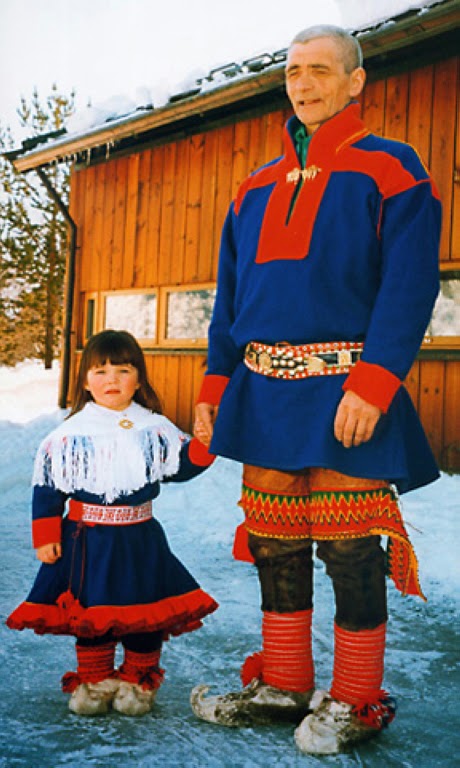 temporary tent-like dwelling called a Lavvo. It is truly a unique cultural experience, which will for a brief moment include you in the life of a remarkable people.
You might be fooled by the concept of Easter, but in this area of our globe, there is plenty of frost and snow still at this time, so bring your winter jacket, scarves and gloves. The race takes place in the center of the town, collecting a nice little gathering of people. You can also visit a Lavvo and taste traditional Sami food. It might surprise you, but much of this food is often very simple and reindeer-based.
The race is in a small open plain in the center. The participants are behind the reindeer, either on skis or on a sled, holding reins to "control" the reindeer. Most of these won't make it to the finish line. Most of the time the reindeer does as it wants and people either fall on their butts before making it very far, or the reindeer runs of in a different direction. For the reindeer that chose to follow their own path, people on snowmobiles follow and track down participants. However, rumor has it many people get lost every year, some never to be seen again...
The Sami are a nomadic people living in the arctic in the north of Norway, Sweden and Finland. They are indigenous to Scandinavia and speak a Uralic language. Their main livelihood is reindeer-herding, something that is legally protected and reserved only for them in many regions in the Nordics. They have very distinct and beautiful, brightly colored traditional dress and live in a
You might be fooled by the concept of Easter, but in this area of our globe, there is plenty of frost and snow still at this time, so bring your winter jacket, scarves and gloves. The race takes place in the center of the town, collecting a nice little gathering of people. You can also visit a Lavvo and taste traditional Sami food. It might surprise you, but much of this food is often very simple and reindeer-based.
The race is in a small open plain in the center. The participants are behind the reindeer, either on skis or on a sled, holding reins to "control" the reindeer. Most of these won't make it to the finish line. Most of the time the reindeer does as it wants and people either fall on their butts before making it very far, or the reindeer runs of in a different direction. For the reindeer that chose to follow their own path, people on snowmobiles follow and track down participants. However, rumor has it many people get lost every year, some never to be seen again...
Thursday, December 26, 2013

Monday, December 23, 2013
Food for Thought - Pareto's Law
The bottom line of Pareto's law is that 80% of the world's resources go to 20% of the world's population. While his theories started in economics, this can be applied to all phasets of life. 20% of the world consume 80% of the world's energy, 20% of a country's population is using 80% of its resources, etc. I believe you could scale it down even to an individual level - 20% of your time is consuming 80% of whichever input you wish to measure. Maybe we should be not only more efficient with our resources, but also more efficient with our time. Cut out all the unnecessary extras and distractions, it could save us time resources and money.
Measure your carbon footprint, become conscious. As they say in recovery programs; realization is the first step on the road to recovery.
Measure your carbon footprint, become conscious. As they say in recovery programs; realization is the first step on the road to recovery.
Sunday, December 22, 2013
Dicy Dishes: Horsemeat Lasagne
The horsemeat found in some premade lasagne was probably the biggest food scandal of the year. Many were shocked and it has made it clearer than ever that we don't really know what is in the food we buy, particularly prepared food.
There have been many documentaries and reportages on the ingredients in our food and how we are increasingly being fooled to buy things that are not as they seem. Horsemeat instead of beef, adding oil or water - sometimes simply air - to push down the costs as far as possible and to lure the buyer to buy something for double its worth.
The horsemeat scandal turned out to be partially accidental as the trickery was done in an early stage by a supplier, meaning no one knew further down the line. Or at least so they claim. Assuming this is true, it is all the more frightening. We are importing food from unknown sources and there are so many suppliers and producers along the way that we no longer know what is in the end product.
I read an interesting article "Risky Meals" on how we import more food and become less self sufficient. Meanwhile, the countries experiencing insuffiency restrict their exports as they try to continue to nourish their people. There is a clear problem of distribution of resources, particularly food products. These are being redistributed through all kinds of imports and exports, but without any substantial monitoring and supervision. While there are more and more laws and policies regulating these exchanges, this remains an issue difficult to oversee.
The article is calling for a mapping where food comes from and where it goes. This could bring insight in the strong and weak points in our production versus consumption habits. Hopefully it can also cut out many unnecessary transports and provide incentive to improve local production. One thing is certain, if we continue down this same road, the export and import networks will only extend and become more complex and less transparent.
There have been many documentaries and reportages on the ingredients in our food and how we are increasingly being fooled to buy things that are not as they seem. Horsemeat instead of beef, adding oil or water - sometimes simply air - to push down the costs as far as possible and to lure the buyer to buy something for double its worth.
The horsemeat scandal turned out to be partially accidental as the trickery was done in an early stage by a supplier, meaning no one knew further down the line. Or at least so they claim. Assuming this is true, it is all the more frightening. We are importing food from unknown sources and there are so many suppliers and producers along the way that we no longer know what is in the end product.
I read an interesting article "Risky Meals" on how we import more food and become less self sufficient. Meanwhile, the countries experiencing insuffiency restrict their exports as they try to continue to nourish their people. There is a clear problem of distribution of resources, particularly food products. These are being redistributed through all kinds of imports and exports, but without any substantial monitoring and supervision. While there are more and more laws and policies regulating these exchanges, this remains an issue difficult to oversee.
The article is calling for a mapping where food comes from and where it goes. This could bring insight in the strong and weak points in our production versus consumption habits. Hopefully it can also cut out many unnecessary transports and provide incentive to improve local production. One thing is certain, if we continue down this same road, the export and import networks will only extend and become more complex and less transparent.
Saturday, December 21, 2013


Friday, December 20, 2013
Conscious Christmas: Gifts and Presents
Christmas is a time of coming together and thinking of others, but often the presents we choose are the results of unsustainable practices. Without going into detail, there are clear economical costs in the production of more or less all consumable goods, but even the eventual disposal of these comes with consequences. We see more and more that materials used in the production are harmful not only to our natural environments, but even to us humans. However, social issues are still insufficiently considered when we shop. How do we know that that sweater we bought was not made by children in a sweat shop? Or if that child's toy was produced under fair conditions and without toxic materials?
There are various labels and brands now that certify specific ecological or social conditions. These are very important, not just as an indicator to us as the consumer, but also as an awareness campaign amongst consumers, producers and sellers worldwide. These brands are spreading and creating a very positive influence on the various parties in production as well as the consumers. However, that said, there are limits to these.
Firstly, there are many different brands, but most of these tend to focus on either ecological/biological issues OR social issues. While I am of the firm belief that they are interconnected and not separable, few combine the two categories. Therefore you must choose if you care about the future of our natural planet or of the people in it. This can be a difficult choice to make. On the bright side, you have plenty of choice in this category and you can find a more mainstream gift if that is what you are looking for.
Another issue is that in order to create an official label, you will have to set official standards. Official standards must in turn have specific definitions and delimitations. There are plenty of scientific or non-scientific literature out there discussing the pros and cons of this so I will not go further into the details of that, but suffice to say that things are complex and imperfect even if you chose all your purchases carefully after branding.
If you want to take your gift giving to another more level, you can chose to make your own gifts. This is often both more ecological, socially just (you know that you treated yourself well, after all) and even economically sustainable (for you). You can find plenty of ways to recycle your material and create a sustainable piece of art to offer to a loved on.
However, if you are like me and you are not artistically gifted, you will find it very difficult to be artsy crafty in a time known for time pressure. You can either stick with the conscious branding or you have some alternatives for those who are of a more altruistic nature. You can make a donation to a good cause in their name. There are also possibilities to adopt an endangered animal (for example through WWF) or be a Child sponsor (offered by Save the Children). Or why not buy UNICEF products? I am mentioning the organizations most known in my region in Europe, but there are plenty of others to choose from. Unfortunately, you are most likely going to have to chose between social or environmental issues also in this case.
There are however organizations that see the links between the social and the environmental issues and that are aware that the poor are the most exposed to environmental problems and disasters (I am not by any means saying the interactions between social and environmental issues are limited to this). An example that I know is COTAP.org where you can buy carbon credits. A unique gift under the Christmas tree.
What are your thoughts on the examples mentioned above?
Do you have other (better?) ideas?
Subscribe to:
Posts (Atom)